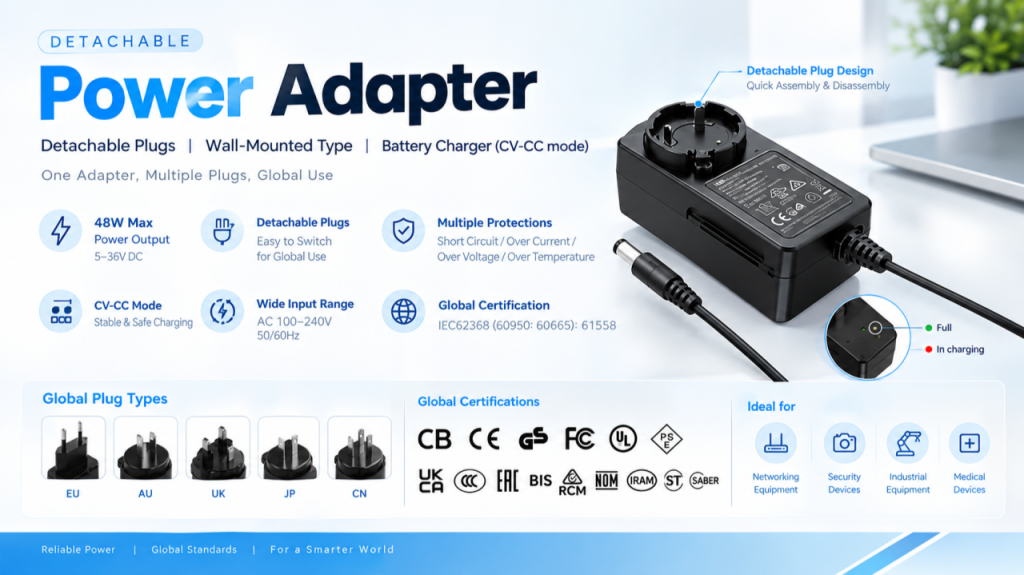
Entering the European market with wall chargers and power adapters presents significant commercial opportunities. However, EU customs detain numerous chargers every year, remove them from major e-commerce platforms, or flag them during market surveillance draw-checks.
At AiecoPower (www.aiecopower.net), compliance and product safety are integral to our manufacturing and delivery process. We know firsthand that regulatory checks aren’t reserved just for large container shipments—even sample deliveries face strict scrutiny. Recently, when sending a small batch of 5 pcs of our AiecoPower 140W GaN charger samples to a client in Portugal, EU customs held the shipment. They required us to present our complete CE EMC and LVD certificates along with the matching test reports, thoroughly verifying every detail before releasing the package.
In most cases, customs holds and platform takedowns stem not from inherent product danger, but from avoidable administrative errors, expired test standards, or incomplete technical documentation. To help brand partners and importers protect their supply chains, AiecoPower has broken down the eight most common CE compliance mistakes in Low Voltage Directive (LVD) and Electromagnetic Compatibility (EMC) testing, along with practical steps to avoid them.
1. Using Expired or Revoked Test Standards
Relying on outdated testing standards is the fastest way to get your Conformity Assessment rejected by customs or platform compliance teams.
Outdated Safety Standards
Legacy standards such as EN 60950-1 and EN 60065 have been officially withdrawn. The mandatory, active safety standard for power supplies and chargers is EN IEC 62368-1. Any Declaration of Conformity (DoC) citing older safety standards is invalid.
Outdated EMC Standards
Similarly, EMC testing must reflect active standards. Reports referencing the old EN 55022 or EN 55024 are no longer accepted. Ensure your EMC reports cite:
- EN 55032 for Emission requirements.
- EN 55035 for Immunity requirements.
2. Treating the CE Mark as a Mere Logo
A CE mark printed on a product casing is not a standalone proof of compliance; it is a legal declaration by the manufacturer or importer that full compliance steps have been completed.
The Required CE Technical File
To legitimately affix the CE mark, you must compile and maintain a Technical File containing:
- A thorough Risk Assessment Report.
- Complete Test Reports issued against active standards.
- A signed EU Declaration of Conformity (DoC).
The 10-Year Archiving Mandate
Once a product is placed on the EU market, the technical file must be safely retained for at least 10 years. Printing a logo on a label without backing documentation provides zero legal protection during an audit.
3. Omitting Other Applicable EU Directives
While LVD and EMC form the core of electrical compliance, power chargers are governed by several additional mandatory directives and regulations.
Key Regulations Beyond LVD and EMC
- RoHS Directive (2011/65/EU & (EU) 2015/863): Restricts hazardous substances in electronic components.
- Ecodesign Directive (ErP – (EU) 2019/1782): Enforces strict energy efficiency standards and no-load power consumption limits.
- WEEE Directive: Regulates e-waste disposal marking and mandates producer registration in destination countries.
- EU Common Charger Directive: Regulates interface requirements (such as mandatory USB Type-C support and clear charging protocol labeling) for applicable categories.
The RED Directive Trap for Wireless Chargers
If your charger incorporates wireless charging capabilities (such as Qi high-frequency inductive loops) or any radio functionality, it falls under the Radio Equipment Directive (RED – 2014/53/EU). In this case, RED replaces LVD/EMC and adds mandatory radio spectrum testing.
4. Mass Producing Modified Designs After Sample Testing
A common operational error is passing laboratory testing with a “golden sample,” but altering the Bill of Materials (BOM) or layout during mass production to lower manufacturing costs.
Why Small Component Changes Fail Audits
For high-frequency power supplies, subtle changes in component selection or layout directly alter performance:
- Replacing transformers or Y-capacitors affects creepage and clearance distances.
- Modifying PCB trace layouts or switching frequency alters conducted and radiated emissions.
- A test report is valid only for the exact construction and component list (Construction Data Form / CDF) recorded in the report. Any material change requires a formal engineering evaluation or a supplementary test report.
5. Underestimating EMC Challenges in GaN Fast Chargers
Gallium Nitride (GaN) technology allows chargers to deliver high power in compact enclosures, but its high-frequency switching introduces significant EMC challenges.
Common GaN Failure Points
Conducted Emission (150 kHz – 30 MHz): switching rates frequently exceed allowable limits without proper filtering.
- High-Frequency Radiated Emission: Parasitic inductance and high switching speeds cause unwanted radiation spikes.
Testing Requirements for Consumer Chargers
1.Class B Limits: Household wall chargers must meet strict Class B emission limits, not the looser Class A limits meant for industrial environments.
2.Multi-Voltage & Full Load-Range Testing: Testing must cover all configurable USB Power Delivery (USB PD) voltage profiles (e.g., 5V, 9V, 15V, 20V, 28V) across light, medium, and full load conditions.
6. Overlooking Plug Specifications and Mechanical Safety
Regulatory agencies inspect physical and structural design just as rigorously as internal circuit board safety.
Critical Structural Inspections
- Plug Dimensions: Europlugs must comply strictly with standards such as EN 50075 (dimension, pin insulation sleeve length, and engagement forces).
- Enclosure Integrity: Materials must pass ball-pressure heat tests and flame-retardant ratings (typically V-0). The finished charger must also survive standardized drop and impact tests.
- Strain Relief: Integrated cables must feature proper strain relief to prevent wire exposure or fatigue over time.
7. Incomplete Labeling, Marking, and Traceability Data
Labeling errors are among the easiest to prevent, yet they remain one of the top causes for automated platform link takedowns on marketplaces like Amazon.
Mandatory Product Markings
- CE Logo: Must maintain a minimum height of 5 mm and correct proportional ratios.
- Traceability: Model number, batch/serial number, and full legal manufacturer name and postal address.
- Electrical Ratings: Input voltage/frequency range and detailed output voltage/current profiles printed clearly on the body.
GPSR & EU Responsible Person Requirements
Under the General Product Safety Regulation (GPSR), non-EU manufacturers must display the contact details (name, postal address, and email) of their designated EU Authorized Representative (EC REP) or importer directly on the product, packaging, or accompanying documentation.
8. Accepting Vendor Certificates Without Independent Verification
Relying solely on a factory’s assurance that they “have CE” without validating the scope of the paperwork exposes your business to legal liability.
EU Customs Checks Apply Even to Samples
As experienced in our recent delivery of 5 pcs of 140W GaN charger samples to Portugal, EU customs officers cross-check physical product labels and model numbers against official LVD/EMC test reports. Because AiecoPower maintains fully certified documentation, our shipment was verified and cleared promptly.
How to Verify Factory Documentation
- Model Scope: Check whether the test report explicitly covers your exact model number, including private-label variants.
- Standards & Dates: Verify that the report cites active EN standards rather than deprecated versions.
- Accreditation: Ensure the testing facility holds ISO/IEC 17025 accreditation with a recognized body (e.g., CNAS, ILAC).
- DoC Ownership: Confirm whether the Declaration of Conformity reflects your brand name or solely the OEM factory name. If you place the product on the market under your own brand, you hold full legal status as the manufacturer under EU law.
Partnering with AiecoPower for Fully Compliant Power Solutions
Achieving CE compliance for wall chargers is a multi-step process that spans initial engineering design, rigorous lab testing, precise labeling, and ongoing supply chain quality control. Whether shipping large volume orders or delivering a sample batch of 140W GaN chargers to a buyer, having valid EMC and LVD test reports ready is indispensable.
At AiecoPower, we prioritize rigorous international certification for all our OEM/ODM power solutions—from high-power GaN fast chargers to industrial-grade power supplies. Explore our certified product portfolio and OEM services at www.aiecopower.net to ensure your power products enter global markets safely and seamlessly.